
| Model No. | ForeAmp-SN695 | ForeAmp-SN696 | ForeAmp-SN695(384) | ForeAmp-SD696 | ForeAmp-ST698 |
| Capacity | 96×0.2ml | 96×0.2ml | 384 well | 6×16×0.2ml | 96×0.2ml |
| Tube | 0.2ml tube, 8 strips,Full 96 wells plate,Half skirt96 wells plate | 0.2ml tube, 8 strips,Half skirt96 wells plate,No skirt 96 wells plate | 384 well plate | 0.2ml tube, 8 strips,Half skirt 96 wells plate | |
| Temperature Range | 0-105℃ | ||||
| MAX. Ramp Rate | 5℃/s | 6℃/s | 5℃/s | 6℃/s | 8℃/s |
| Uniformity | ≤±0.2℃ | ||||
| Accuracy | ≤±0.1℃ | ||||
| Display Resolution | 0.1℃ | ||||
| Temperature Control | BlockTube | ||||
| Ramping Rate Adjustable | 0.1-5℃ | 0.1-6℃ | 0.1-5℃ | 0.1-6℃ | 0.1-8℃ |
| Gradient Temp. Range | 30-105℃ | ||||
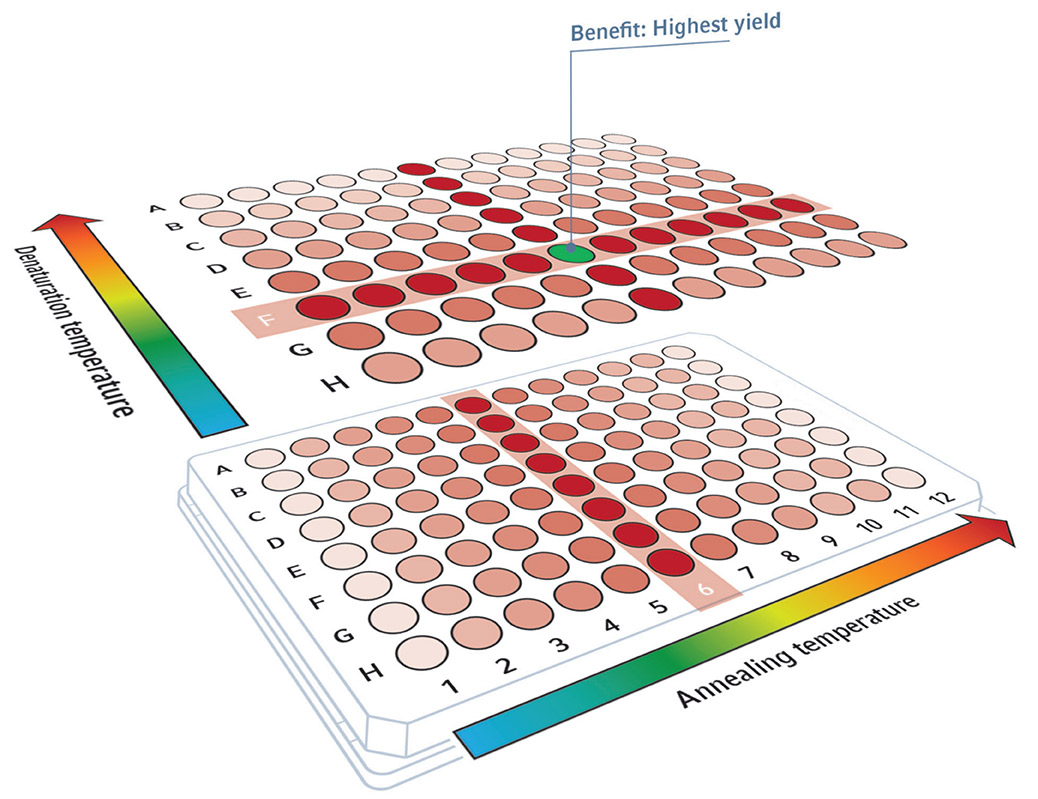
| Gradient Type | Nolinear Gradient | Dynamic Gradient | Two-Dimensional Gradient | ||
| Gradient Spread | 1-42℃ | six zone,each zone is 0.1-5℃. | Horizontal:1-30℃ | ||
| Vertical:1-24℃ | |||||
| Hot Lid Temperature | 30-115℃ | ||||
| Number of Programs | 20000 +(USB FLASH) | ||||
| Max. No. of Step | 30 | 40 | |||
| Max. No. of Cycle | 100 | ||||
| Time Increment/Decrement | 1 Sec - 600 Sec | ||||
| Temp. Increment/Decrement | 0.1-10.0℃ | ||||
| Pause Function | Yes | ||||
| Auto Data Protection | Yes | ||||
| Hold at 4℃ | Forever | ||||
| Touchdown Function | Yes | ||||
| Long PCR Function | Yes | ||||
| Language | English | ||||
| Computer Software | Yes | ||||
| Mobile phone APP | Yes | ||||
| LCD | 10.1 inch,1024×600 pels | ||||
| Communication | USB2.0 , WIFI | ||||
| Dimensions | 385mm× 270mm× 255mm (L×W×H) | ||||
| Weight | 10kg | 10kg | 17kg | ||
| Power Supply | 100-240VAC,50/60Hz , 600 W | 100-240VAC, | 100-240VAC, | ||
 Application 1.Gene amplification for research and clinical use 2.Qualitative PCR gene amplification 3.Fluorescent/Enzyme-Free Endpoint Quantitative DNA Gene Amplification 4.Gene amplification for other gene analysis applications such as microarrays 5.Suitable for various PCR kits at home and abroad for infectious diseases (various hepatitis viruses, Mycobacterium tuberculosis, STD sexually transmitted diseases, prenatal and postnatal care, mycoplasma, chlamydia, parasites, etc.), tumors (P53, Helicobacter pylori, etc.), scientific research (Genetic identification, bacterial virus typing, etc.)